Announcement
- Sept 4, 2026We have increased capacity to 80 students.
- Aug 28, 2026Audit policy: everyone is free to audit as long as it is permitted by school policy and the classroom has space. However, we do not have computing resources for auditing students.
- Aug 17, 2026Welcome to CS2680 Modern AI Systems: Agents and System Optimizations! Class meets Monday and Wednesday in SEC LL2.229.
Overview
This course follows one agentic system from the agent loop down through the serving stack. You first use a modern coding agent (Claude Code), then design your own agent using provided API access, measure it, and optimize it. Then you serve an open-weight model yourself and take responsibility for the layers underneath: batching and scheduling, KV-cache and prefix reuse, routing, quantization, and speculative decoding.
-
Computer systems:
Operating Systems: Three Easy Pieces
- Machine learning systems: Machine Learning Systems
-
Large language models:
Foundations of Large Language Models
- Deep learning: The Little Book of Deep Learning
- Part I — Introduction to LLMs and agents. You will learn about how to use coding agents (Claude Code) and how to design an agent. You will also explore various agent architectures, use cases and optimizations.
- Part II — Systems for LLMs and agents. We will talk about LLM serving (batching, scheduling, routing, caching, quantization, and speculative decoding) and agentic systems.
1 “Mads” abbreviates Modern Agent Design and Systems, the arc of this course, and nods to MaDSys, Harvard’s Measurement and Design of Systems research group, which teaches and supports it.
- Assignment 1 Mads-Lens: watch the agent work10%
- Assignment 2 Mads-Loop: build the loop10%
- Assignment 3 Mads-Opt: make every token count20%
- Assignment 4 Mads-Serve: own the model20%
- Assignment 5 Mads-Stack: optimize the full stack10%
- Project20%
- Class participation10%
- Bonus optional presentations up to 4% each; course feedback up to 6%; problems current AI cannot solve, 2% eachup to 10%
See policy page for details.
Staff
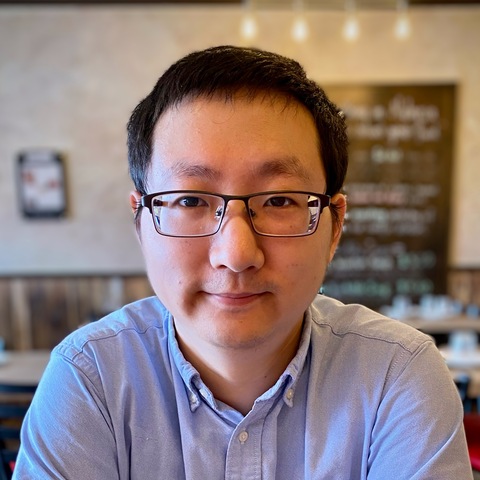


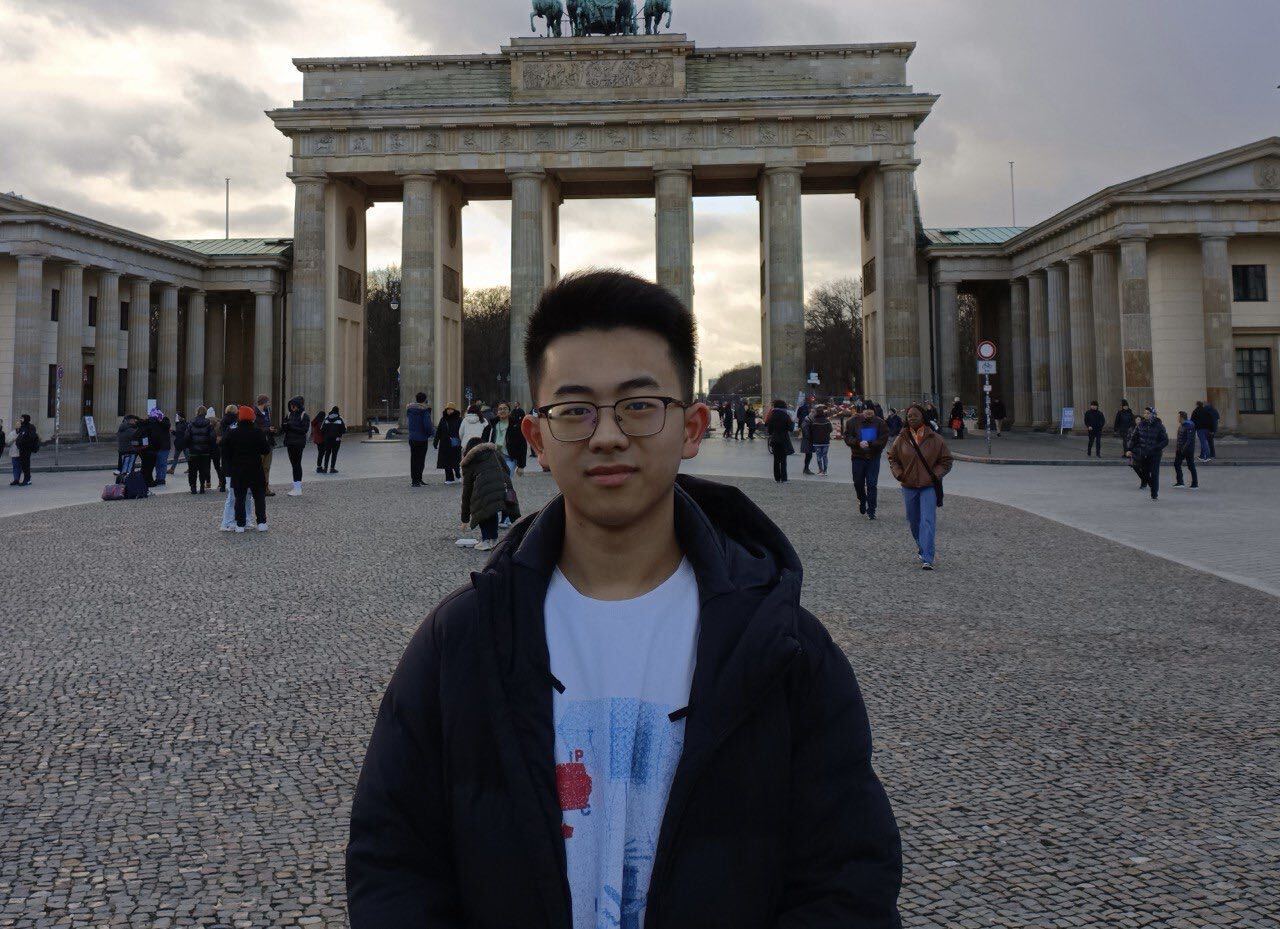

- Instructor: Appointment only
- TFs: See Ed + by appointment
Schedule
Tentative and subject to change. Rows with Students as the speaker are student-led: either a paper discussion (see the paper discussion page) or an assignment sharing session. Paper presentations are optional and can earn up to four bonus percentage points each.
| Week | Date | Speaker | Topic | Readings | Notes |
|---|---|---|---|---|---|
| Part I — Introduction to LLMs and agents | |||||
| 1 | 2026-09-02 | Juncheng Yang | Course overview and logistics [slide] | Assignment 1 out (Mads-Lens: Watch the agent work); Sign up for AWS | |
| 2 | 2026-09-07 | No class — Labor Day | |||
| 2 | 2026-09-09 | Juncheng Yang | Agents use I: How Claude Code Works [slide] | How I use LLMs; Best practices for Claude Code; Agentic Engineering Patterns; more reading → | |
| 3 | 2026-09-14 | Juncheng Yang | Agents use II: 100x Engineer with Multi-agents [slide] | Claude Code agent teams; Software is changing (again); Research acceleration: The view inside OpenAI; more reading → | |
| 3 | 2026-09-16 | Juncheng Yang | Agents design I: context management and tool design [slide] | ReAct; A practical guide to building agents; LLM Powered Autonomous Agents; more reading → | Assignment 1 due Sun Sep 20, 11:59pm |
| 4 | 2026-09-21 | Students | Student sharing I | What you learned from using an agent (Assignment 1): surprises, failures, lessons, insights, new tools/skills/plugins | Assignment 2 out (Mads-Loop: Build the loop) |
| 4 | 2026-09-23 | Juncheng Yang | Agents design II: multi-agent architecture, coordination, and communication [slide] | multi-agent research system; scaling agent systems; don’t build multi-agents; more reading → | |
| 5 | 2026-09-28 | Juncheng Yang | Agents design III: agent memory and reliability [slide] | where agents fail; MemGPT; more reading → | |
| 5 | 2026-09-30 | Juncheng Yang | Agent design IV: agent evaluation and cost-effective agent [slide] | Agent evaluation and benchmarks | Assignment 2 due Sun Oct 4, 11:59pm |
| 6 | 2026-10-05 | Harsh Nilesh Pathak (Snowflake) | Guest lecture: Developing and Evaluating Agents in Enterprise Setting | Assignment 3 out (Mads-Opt: Make every token count) | |
| 6 | 2026-10-07 | Juncheng Yang | Advanced agent design I: Cost, performance and others | Pre-proposal due (optional and only submit if you want to discuss your ideas) | |
| 7 | 2026-10-12 | No class — Indigenous Peoples’ Day | |||
| 7 | 2026-10-14 | Students | Advanced agent design II: agent safety, self-evolving harness | ||
| Part II — Systems for LLMs and agents | |||||
| 8 | 2026-10-19 | Juncheng Yang | Efficient LLM serving: basics I | Assignment 3 due Tue Oct 20, 11:59pm | |
| 8 | 2026-10-21 | Juncheng Yang | Efficient LLM serving: basics II | Assignment 4 out (Mads-Serve: Own the model) | |
| 9 | 2026-10-26 | Juncheng Yang and Students | Assignment Feedback and Student sharing II | Common pitfalls in your submission; Assignment 3 lessons sharing. | |
| 9 | 2026-10-28 | Juncheng Yang | Efficient LLM serving: speculative decoding | Project proposal due | |
| 10 | 2026-11-02 | Juncheng Yang | Efficient agentic systems: scheduling and prefix caching | This lecture is earlier because of Assignment 4. | |
| 10 | 2026-11-04 | Juncheng Yang | Efficient LLM serving: pruning and quantization | ||
| 11 | 2026-11-09 | Xianzheng Kou (Meta) | Guest lecture: Why Infrastructure sets the pace of AI | Assignment 4 due Tue Nov 10, 11:59pm | |
| 11 | 2026-11-11 | Juncheng Yang | Efficient LLM serving: GPU and kernels | Assignment 5 out (Mads-Stack: Optimize the full stack) | |
| 12 | 2026-11-16 | Students | Efficient LLM serving: KV-cache optimization and model architectures | ||
| 12 | 2026-11-18 | Students | Student sharing III | Demonstrate your agent-engine co-design (Assignment 4) | |
| 13 | 2026-11-23 | Juncheng Yang | Efficient agentic system: routing and load balancing | Assignment 5 due Sun Nov 29, 11:59pm | |
| 13 | 2026-11-25 | No class — Thanksgiving recess | |||
| 14 | 2026-11-30 | Juncheng Yang | Efficient agentic systems: others | ||
| 14 | 2026-12-02 | Students | Student sharing IV | Showcase your full stack optimizations (Assignment 5) | |
| 14 | 2026-12-07 | Students | Final project poster and demo | Present your final project as a poster and a live demo. Location: SEC 1.402 from 9:00 AM to 1:00 PM |
Final project due Tue Dec 8, 11:59pm |
Reference pages
- Agent evaluation and benchmarks. Evaluation design, metrics, reliability, cost, and benchmark selection.
Compute resources
Setup instructions for every environment the course uses are on the computing setup page. Compute for the assignments and the final project comes from:
- Claude Code. Required for Assignment 1.
- Model API access. Required for Assignments 2 and 3.
- The course HPC. Required for Assignments 4 and 5.
- AWS. Register in week one; using the account is optional.
Sponsors
We are grateful for the support of our sponsors.

The Claude license behind Claude Code.

The course HPC, 72 CPU servers and 120 dedicated RTX PRO 6000 Blackwell servers. API access for OpenAI, Anthropic and Gemini models.


Software system, data and hardware support.